

1.
When I was a kid, the worst thing about the weekend was that it would end. Then came the misery of Monday morning, when school rolled back around like a Greek boulder. On the weekend, you had an expanse of slow hours and explorable space; the week narrowed that into a timetable of five insufferably dense days. Still, the freewheeling openness that defined playful Saturdays and lazy Sundays had its own downside: boredom.
I’ve been thinking about this lately because I haven’t been able to write. The words won’t come, except to shoot intellectual blanks, dud ideas that stink of fraud. So I’m sitting here at my desk trying to trick my writing brain by thinking about something other than writing. I’m trying to remember what boredom felt like when I was a kid. I think it was like hunger or the need to pee — urgent and demanding resolution, but only a problem for the person feeling it. The difference was that if I didn’t eat or pee, I starved or wet myself, but if I didn’t get rid of my boredom, I just… stayed bored.
No wonder I got no sympathy for my condition. My dad would be reading the paper or tinkering with something that looked like work yet constituted that inexplicable hobby called “DIY”, and I’d whine, “I’m booored!” with the same desperate urgency I’d once told him that I’d stood on a nail. He pulled the nail out with strong fingers gripping the flat head and a tender hand holding my ankle; the boredom he ignored. “Go and do something,” he’d say dismissively. It turned out to be solid advice every time. I went and did a lot of great things.
There was that time I wanted to see what happened when I microwaved a fork. (Answer: a few glittery sparks, an outsized reaction from my mum when she walked in and saw the minor fireworks show, and a long-time ban on using kitchen appliances.)
There was a treehouse that didn’t get much further than a few floorboards (made from the smashed up headboard of a bed destined for the dump) nailed sort of horizontally across a thick-ish branch. That was most of a day spent planning and climbing and hammering and wobbling-balancing-leaping-to-safety. It never mattered that it was never finished; those were the days when I knew how to enjoy what I was doing, not just what I’d done.
There were friends I idly called on, knocking on doors and asking mums if their sons could come out, the afternoons of pretend and real adventures. When I remember childhood, I think of Dryden’s line about how “wild in the woods the noble savage ran”. We were always leaping over streams or sailing along the parabola of a rope swing, running and pounding pine needles into the dough of damp earth, or riding on my trusty steed, a Redline BMX. I can still hear the rainfall clatter of its spoke beads as the wheels turned over dirt tracks.
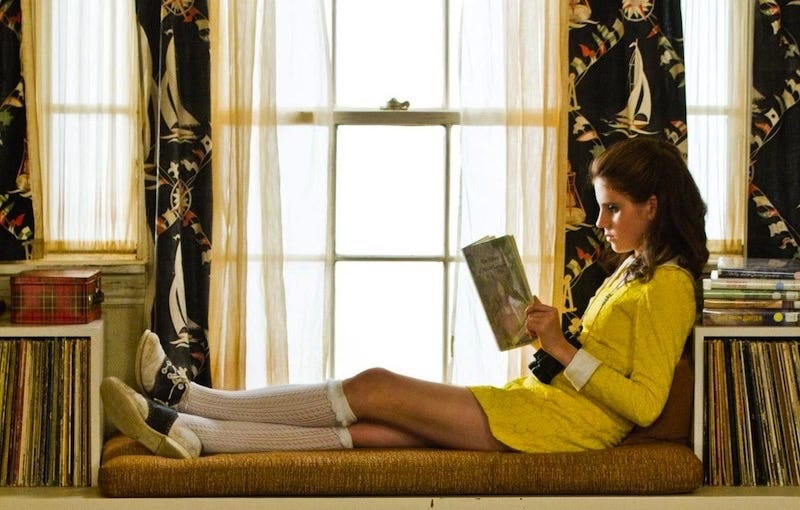
What I most remember was all the reading — the dizzying quantity of it, sure, but also the variety. Saturdays started with a trip to the public library with my dad, and I’d go home with a stack of Tintin comics, Choose Your Own Adventure stories, books on woodworking projects, how-to manuals on cartooning, gardening, birdwatching, any other interest that even fleetingly captured my attention, and omnibus collections of The Hardy Boys and Nancy Drew. I could never quite believe that the library just let me take these things home for free.
Sometimes I’d finish my library books by Sunday afternoon, so I’d scan the newspaper my dad left out on the armchair, wondering if this time the news wouldn’t numb me back to the boredom I was trying to avoid. Or I’d go to the strange encyclopaedias on our family bookcase, a set of green hardbacks that revealed the wonderful paradox of such books: they’re full of secrets anyone can know. I felt like an explorer when I opened one and unfolded a drop-down page depicting the cross section of a dissected frog or the stacking epochs of Earth’s history.
Other times, boredom led me to read my siblings’ library books. Having sisters meant I read Judy Blume at the age of twelve and discovered the parallel world girls lived in. I didn’t know that some things weren’t “meant” for boys until high school, when sniggers from girls and dead arms from boys warned me not to read certain books. In the school day, I glimpsed the unfreedom that grown-ups around me already knew. On the weekend, I was free. Boredom was just the price I paid for that freedom.
Boredom was also the discomfort that came from under-stimulation, which our culture solved sometime around 2010 with auto-play feeds of infinitely multiplying videos, streaming being the right word for the moving images that flow day and night into our eyeballs, podcasts to fill the ears, to fill our empty moments so there’s always something going on, to fear missing out on, to struggle to keep up with, something to have an opinion about and multiple platforms on which to voice those opinions, other voices to mute even though muting just gets you other voices, and we listen to those voices before we’ve even heard our own voice in our own head when we wake up in the morning, so there’s no more discovering who we truly are in the absence of influence and distraction and noise noise noise…
Bottom line: no more under-stimulation.
In its place, we have the hyper-stimulation of constant distraction. It’s impossible to be truly bored with our attention fixed on this thing, now this thing, now that thing, now those things. The monkey’s paw of technology gave us what we thought we wanted. If only we’d known that craving stimulation might not be as bad as getting it — and we got it, good and hard.
This cognitive clutter was the reason I couldn’t write anymore. I had nothing to say, didn’t know what I thought about anything, and the creative well was full of stale ideas and stolen voices. What I needed was space to let the well refill with my own ideas. I needed the childish boredom that led to the death-trap treehouse, the microwaved cutlery, the reckless reading, the joyful discoveries. I needed to let myself get bored.
2.
Two days ago, I resisted the urge to fire up the laptop and open twelve different apps (Spotify for background listening, Safari for research-reading-procrastinating, Word for blank-page-staring, and all the rest) and instead I sat in the rocking chair in my study with a coffee in hand. I set myself a challenge to resist using the internet all weekend, or listening to podcasts, music, or radio, or streaming anything on my TV.
Sitting there in the first few minutes of the weekend’s challenge, I waited for a moment of transcendence when the pure authenticity of a quiet moment and the real world would fill me with awe. The rocking chair popped at the peak of every forward lean. One of the cross bars beneath the seat was loose. I thought about getting some tools to fix it. Maybe there was a YouTube video that would help, and I could listen to a podcast while I tinkered, and…
No, this wasn’t how I eased my boredom as a child. It wasn’t a case of filling space with a ton of stuff that left absolutely no wiggle room. The things I did back then allowed me room to think, to breathe. If I built a go-cart, I was only building a go-cart, not maximising that time to also tidy my bedroom and finish my homework and write that thank-you note I owed my grandparents. God, it was so easy to be immersed in things as a kid.
I decided to fix the chair and only fix the chair, no soundtrack or the noise of a stranger’s tinny voice telling me through laptop speakers how to do something I could work out for myself. That took me about eight minutes. I sat on the chair to test it, and one minute later I was bored. This experiment had started when I woke at six-thirty, and by nine am, I was itching to scroll an infinite and infinitely changing webpage while listening to a podcast and an album and watching two videos at once on split-screen.
By the evening, I was desperate. I called a friend, who met me at the cinema for a screening of Jaws. I noticed that my favourite scene was one where Brody’s young, unevenly-toothed son mimics his father’s despondent body language. Brody tells the boy to give him a kiss.
“Why?” his son asks.
“Because I need it,” says the father.
In a movie about the adventure of fighting a great white shark, this scene — this precise observation of an intimate moment — was wonderfully thrilling. It woke that deep part of me that reacts to truth in art like a crazed evangelical who wants to yell, Yes! This! This is right, everyone should come and look at this, experience this! Of course, I kept quiet in the cinema.
I went home, and my wife showed me a video-clip of a hummingbird moth. It hummed as it hovered, its wings a faint haze in the perfect shape of their fan. This blur was perpetually darker at the top and bottom of its motion, which reminded me of the first footnote in Nicholson Baker’s The Mezzanine, about “the constancy of shine on the edges of moving objects”. I went to the study and got the book to read the rest of the passage:
“Even propellers or desk fans will glint steadily in certain places in the grayness of their rotation; the curve of each fan blade picks up the light for an instant on its circuit and then hands it off to its successor.”
I recognised this constant gleam on rotating metal in the blur of the moth’s wings. In the video, the hummingbird moth was hovering in front of its plunder, siphoning nectar from a flower through its straw-like protrusion. I suddenly felt like an astonished child flipping through library books of bisected creatures and objects. Back in the living room, I interrupted my wife’s reading to ask, “So it eats pollen?”
“What does?”
“The hummingbird moth.”
She nodded. “Pollen, nectar... Basically all butterflies and moths drink flower juice.”
“But caterpillars eat leaves, right?”
“Yes...” she said, as if she now saw me as a simple child.
So here I am, two days later on a Monday morning, sitting in my study with my notebook open and pen uncapped, wondering why a creature eats one type of food in one of its forms, then another kind of food when it takes on a different form. I guess it’s like how humans drink breastmilk as infants and graduate to vegetables and coffee and chocolate fudge sundaes when we’re older. Now I’m wondering about lactose-tolerance, which leads me to the agricultural revolution, to hunter-gatherer societies, to the tribe of cannibals in Papua New Guinea that David Attenborough once greeted with a smile to win them over, to David’s brother Richard Attenborough, who starred in Jurassic Park, directed by Steven Spielberg, who also directed Jaws, and with no better word than “Eureka!” to express this moment of jump-out-of-the-bath inspiration, I have a paragraph in my head about how my favourite moment in Jaws uses the same close attention to life that I find in Baker’s books.
There’s a fresh page at the top of my notepad, and I pick up my pen, scribble some lines that start as faint scratches and become darker as the ink collects at the nib and bleeds into the paper. I’m ready to write, at last. I begin with this: When I was a kid, the worst thing about the weekend was that it would end.
Thanks for reading Volumes.
I’m trying to make this project financially sustainable enough to be my official answer when strangers ask, “So what do you do?”
If you’d like to support me, it’s only £5 a month, or £50 for the year.
The ending had me tearing up. Excellent piece, Matthew. Our childhoods don't sound dissimilar.
Monkey's paw of technology - what a great line!
What Redline did you have? My pal had an RL20. My ride was a Craig Campbell Pro-Lite.