

Hello, Bookstore (2022)
How do you describe a film like Hello, Bookstore, a captivating documentary with a total absence of anything like plot? The film itself kind of forces you to say, “It’s about a bookstore.” You can try to sex it up, adding that it was filmed during the pandemic lockdowns when running a small business was nearly impossible. Some people got glassy-eyed when I said this, confused about how a quiet film on this modest topic could excite me. Other people lit up instantly, and these were kindred spirits who only have to hear the word “book” to come alive.
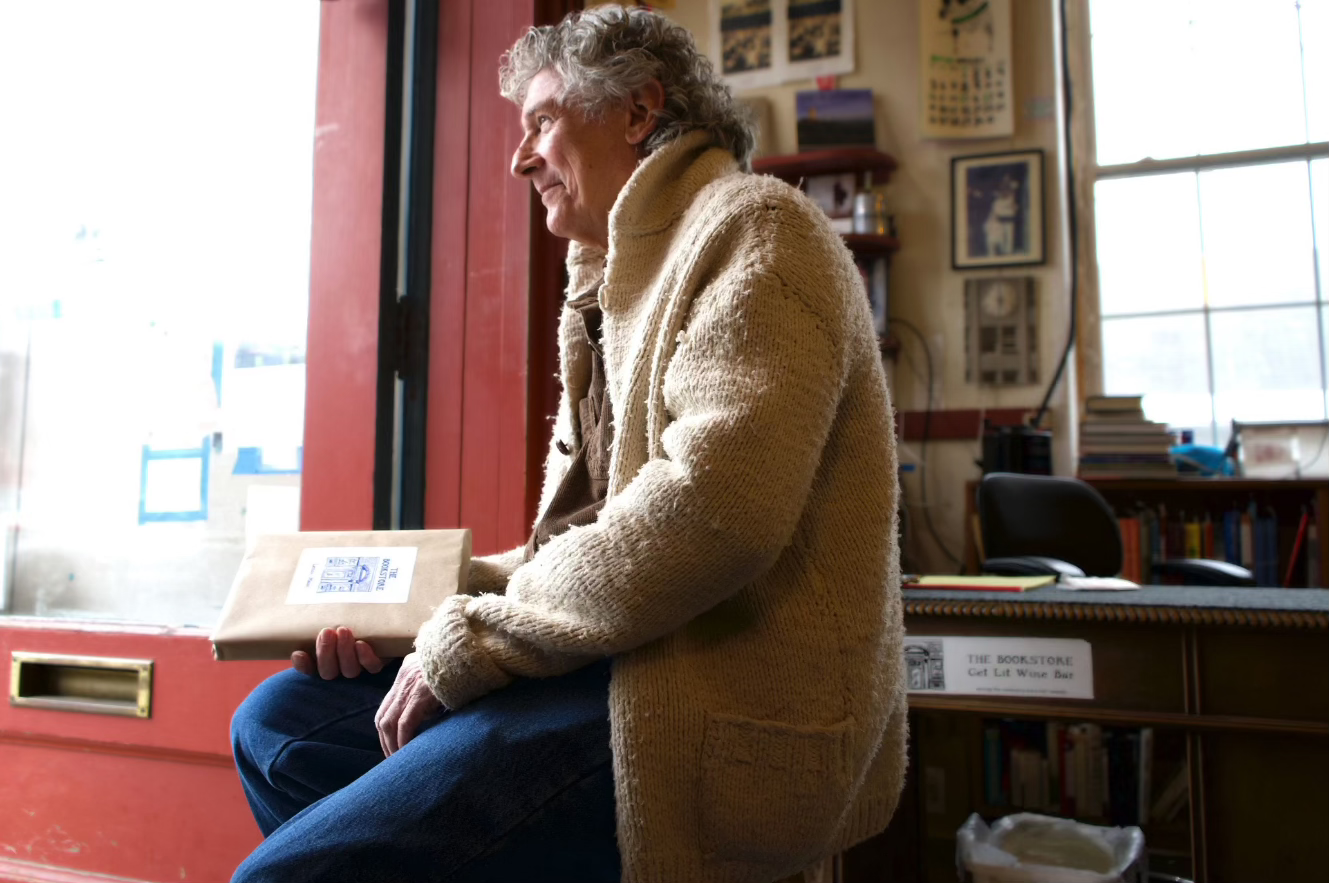
In Hello, Bookstore, Matthew Tannenbaum — the down-to-earth owner of a bookstore in Massachusetts — tells a customer about the life of a bookseller: sitting around all day, reading and talking about the things that interest you most, interrupted only when people give you money. We spend most of the runtime watching Tannenbaum do essentially that. Director A. B. Zax (a wonderfully alphabetic name) takes a hands off approach, leaving the viewer to browse through the store, and somehow this makes for a truly compelling ninety minutes.
Although Hello, Bookstore is about a bookshop and its book-obsessed owner, it succeeds precisely because it’s a piece of cinema. The film’s central charm, which keeps us eager to see more in spite of its lack of narrative thrust, is in how it conveys the nature of spending time in a secondhand bookstore. There is an experiential quality — “qualia”, to use the philosophical jargon — inherent to time spent in a room full of old books and dust motes hanging in the sunlight, and this quality is inarticulable. Words can come close but can’t really touch the experience. Film, though, can get you close enough to feel it for yourself.
Hello, Bookstore is the cinematic equivalent of browsing for books. The camera is never in a hurry to make a point or tell you what you ought to be looking at (although, like a good bookseller, it occasionally draws your attention to things that might interest you). The score is eclectic — some classical stuff here, a little jazz piano there — and scraps of conversation are sprinkled in like shelf talkers, bits of an anecdote or the punchline of a joke cutting across meandering shots of bookshelves, “Vote Bernie” paraphernalia, and dusty furniture.
Speaking of that furniture: one of Tannenbaum’s grown-up daughters says that she likes slipping into the store “anonymously” and sitting in the big pink chair opposite the register to watch her dad interact with customers. There’s a shot of that chair with a young girl (presumably a customer who came in while they were filming) sitting in it, reading, then a cut to the chair on its own, its stuffing falling out of a large tear. The editing implies a story, suggesting the daughter’s lifetime growing up in the store, the natural ageing of its furniture and its occupants.
The editing shoulders a lot of the work in Hello, Bookstore. It’s never showy or grasping for your attention, but without the editor’s eye for a telling detail or a curious juxtaposition, the total lack of a narrative might have worn thin. The generosity of the direction and the editing together lets you feel like you’re roaming freely. The camera is our co-conspirator in eavesdropping on the conversations going on in the store.
There’s a single question I can’t answer: why are there black and white shots inserted seemingly at random into the film? The documentary opens with a black and white prologue that foreshadows the pandemic to come, and this works. But throughout Hello, Bookstore there are black and white shots that don’t foreshadow anything, and there’s no apparent consistency in how the shots are utilised. There’s even one colour shot that inexplicably turns black and white. Trying to puzzle out the logic for this did pull me out of the film a few times.
But that’s the only affectation in a film that never resorts to sensationalising anything for the sake of conflict, including the pandemic. There are no ticking clocks, none of the expected dramatic devices lesser films would employ to create stakes and tension. Even when the lockdowns mean that the bookshop faces real difficulty, when Tannenbaum shows us his finances scrawled on a yellow legal pad and says he’s now making in a week what he used to make in a day, there’s very little sense of risk on a grand scale. This isn’t a film about the importance of books or independent business in society. The stakes are no greater nor smaller than they are for Tennenbaum himself; this is a human story.
Hello, Bookstore isn’t after converts. It unfolds to reveal the overlapping lives that depend on this store (and those who simply enjoy it; the film makes clear that simple pleasure isn’t to be sniffed at). The viewer, in possession of a beating heart and a feeling soul, cares that these people might lose the place they love. If the sheer pleasure of spending time in a bookstore with book-lovers doesn’t bring you to life, or if you need a lot of things happening in your movies, this film isn’t for you. If, on the other hand, you’d be excited by a reading list at the end of a movie (as this one has in its credits), then do say hello to this bookstore.